

The world’s largest human gathering — and why millions still answer its call.
April 25, 2026
“At the confluence of rivers, the boundaries between the mortal and the divine dissolve — and for a moment, you are neither pilgrim nor stranger. You are simply part of something infinite.”
400M+ Peak pilgrims (2019)
12 yrs Between Maha Kumbh
4 Sacred host cities
What is Kumbh Mela?
Kumbh Mela is a mass Hindu pilgrimage held at the banks of sacred rivers in India — a festival of faith so vast it is visible from space. The name translates to “festival of the sacred pitcher,” a reference rooted in ancient mythology. According to the legend of Samudra Manthan (the churning of the cosmic ocean), gods and demons fought over a kumbh (pitcher) filled with amrita — the nectar of immortality. Drops of this nectar are said to have fallen at four sacred sites: Prayagraj, Haridwar, Ujjain, and Nashik — the very cities that host Kumbh Mela today.
The Spiritual Heart of the Festival
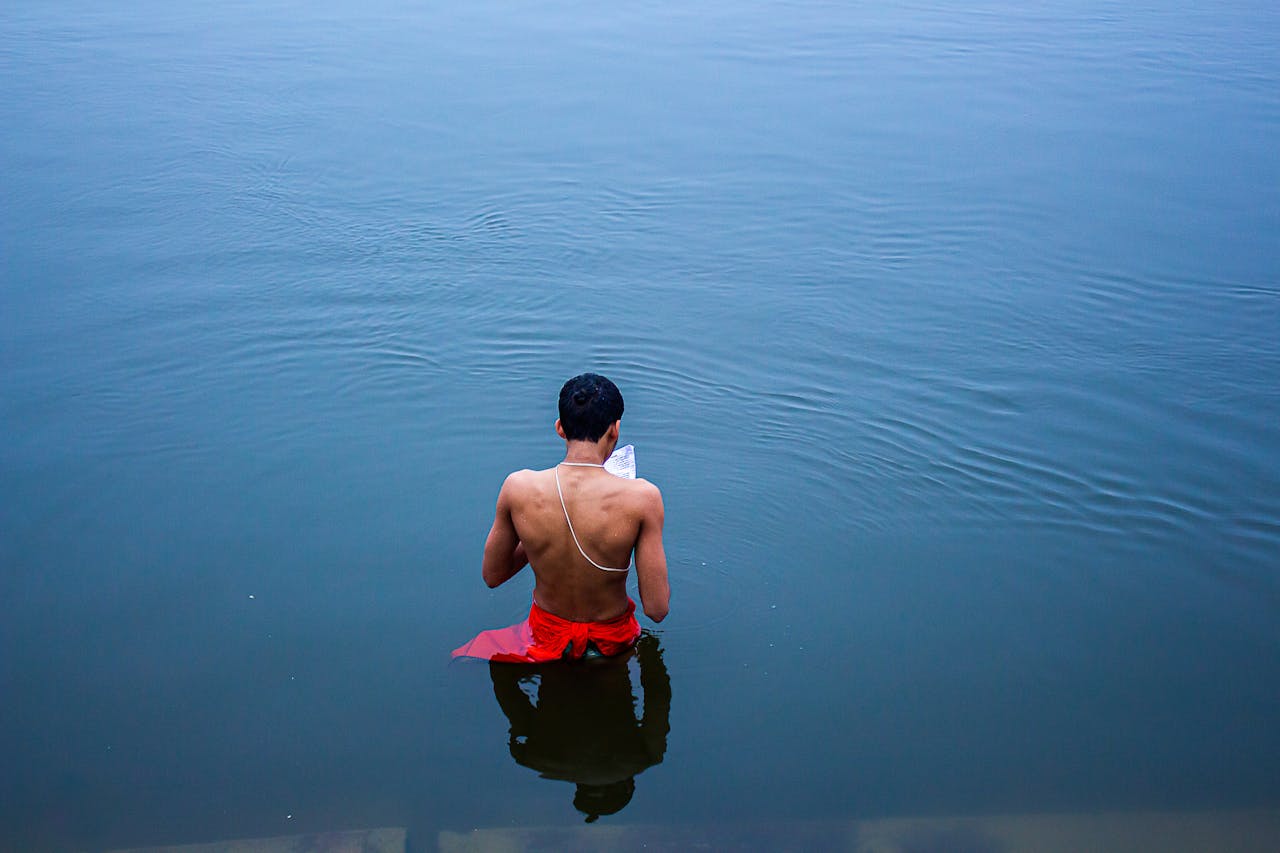
At its core, Kumbh Mela is about purification and liberation. Devout Hindus believe that bathing in the sacred river during auspicious dates — determined by the alignment of the sun, moon, and Jupiter — cleanses the soul of sins and breaks the cycle of birth, death, and rebirth. The holiest of these baths is called Shahi Snan (the royal bath), during which ascetics, saints, and millions of ordinary pilgrims immerse themselves in the sacred waters simultaneously.
Beyond the ritual bath, Kumbh Mela is a living university of ancient wisdom. Revered sages and sadhus — wandering ascetics who otherwise live in forests and caves — emerge to give discourses on the Vedas, Upanishads, and the nature of existence. For many pilgrims, the chance to receive a blessing or teaching from such a figure is a once-in-a-lifetime spiritual gift.
Four Gatherings, One Spirit
Kumbh Mela takes several forms. The Maha Kumbh occurs every 12 years in Prayagraj (at the confluence of the Ganges, Yamuna, and the mythical Saraswati) and is the most sacred. The Ardh Kumbh happens every 6 years, while smaller Kumbh and Purnakumbh gatherings take place across the four cities on a rotating cycle. The 2025 Maha Kumbh in Prayagraj drew an estimated 400 to 600 million visitors over 45 days — making it the single largest peaceful gathering of human beings in recorded history.
Why It Still Matters
In an age of digital distraction, Kumbh Mela stands as a profound testament to the enduring power of faith. It transcends caste, class, and background — a farmer from a remote village wades into the same waters as a city-dwelling professional, both seeking the same grace. UNESCO recognized the festival on its list of Intangible Cultural Heritage of Humanity in 2017, acknowledging it as a spiritual and cultural phenomenon of extraordinary significance.
Whether you are a devoted Hindu, a curious traveler, or simply someone moved by the sight of millions of souls united in a shared act of hope — Kumbh Mela speaks to something universal: the human longing to be washed clean, to begin again, and to belong to something far greater than ourselves.
“Kumbh Mela is not merely a festival. It is the world’s oldest expression of collective faith — a river of souls flowing toward the sacred.”