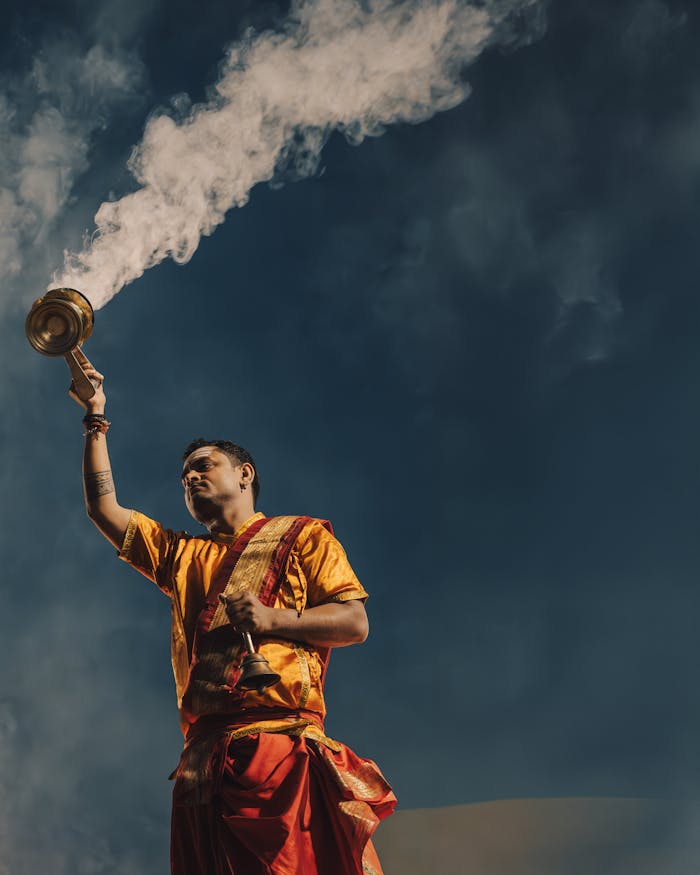

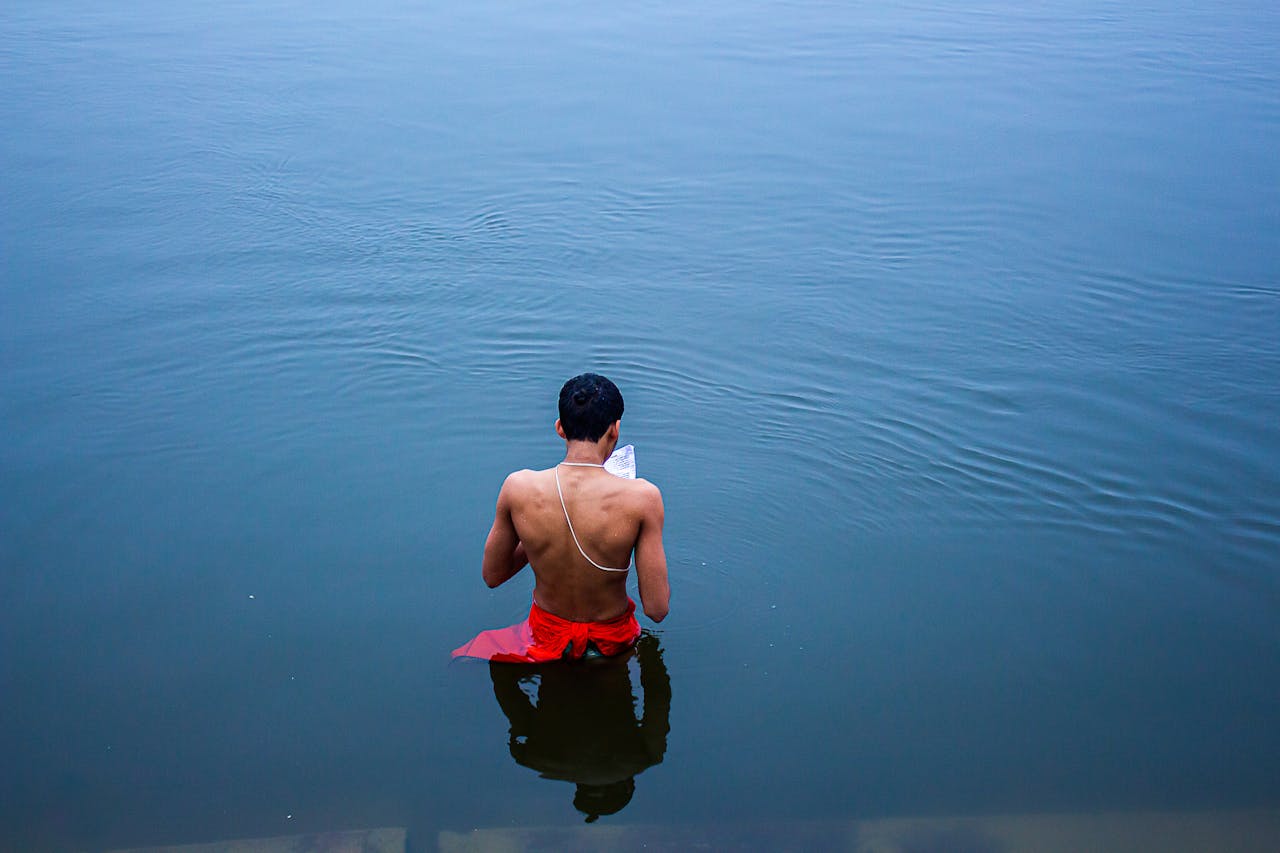
Trimbakeshwar & the Godavari: The Spiritual Soul of Nashik Kumbh
Meta Description: Why is Trimbakeshwar so sacred? Discover the spiritual significance of Trimbakeshwar temple, the Godavari River, and Kushavarta Kund — the sacred heart of Nashik’s Kumbh Mela.
Focus Keyword: Trimbakeshwar Nashik Kumbh Mela spiritual significance
Thirty kilometres from Nashik city, tucked into the foothills of the Western Ghats, lies a small town that carries the weight of one of Hinduism’s most profound cosmic beliefs.
Trimbakeshwar.
To the untrained eye, it is a quiet temple town — narrow lanes, flower sellers, the sound of bells and Sanskrit chanting drifting through stone archways. But to the millions of pilgrims who converge here every twelve years during the Kumbh Mela, Trimbakeshwar is something else entirely: the point where heaven touches earth, where a sacred river was born from the devotion of a sage, and where the divine nectar of immortality once fell.
Understanding Trimbakeshwar is to understand the soul of the Nashik Kumbh Mela.
The Story at the Beginning: How the Godavari Was Born
Every river has a geography. The Godavari has a mythology — and it begins here, on the Brahmagiri Hills above Trimbakeshwar.
The story, as told in the ancient texts, centers on the sage Gautama Rishi, who lived and meditated on these hills with his wife Devi Ahilya. Through an unjust series of events, the sage was accused of a sin he did not commit. Determined to purify himself and restore his honor, Gautama Rishi performed intense penance, praying to Lord Shiva with absolute devotion.
Shiva appeared before him and asked what boon he desired. The sage made no small request. He asked for the sacred river Ganga herself to descend from the heavens to the earth, so that her purifying waters could flow across the land and bless humanity.
Lord Shiva, pleased with the depth of Gautama’s devotion, agreed. He allowed the divine river to flow from his matted hair (jata) and descend upon the Brahmagiri Hills. The river that emerged became the Godavari — called the Ganga of the South or Dakshina Ganga — and it flows from Trimbakeshwar eastward across the Deccan Plateau for 1,465 kilometres before reaching the Bay of Bengal.
This is why Trimbakeshwar is called the birthplace of the Godavari. And this is why bathing in these waters during the Kumbh Mela is believed to carry the same purifying power as bathing in the Ganga herself.
The Trimbakeshwar Jyotirlinga Temple
At the heart of Trimbakeshwar town stands one of the most significant temples in all of India — the Trimbakeshwar Shiva Temple, home to one of the twelve Jyotirlingas (sacred shrines of Lord Shiva) mentioned in the ancient scriptures.
What makes this Jyotirlinga exceptional, even among the twelve, is its form. The Trimbakeshwar Linga uniquely represents the Trimurti — the three faces of divinity in Hinduism: Brahma (the Creator), Vishnu (the Preserver), and Mahesh or Shiva (the Destroyer and Transformer). Three small lingas sit within a single depression in the sanctum, making this the only Jyotirlinga to represent the full cosmic trinity.
The temple itself was largely reconstructed during the 18th century by the Peshwa ruler Nanasaheb Peshwa, and it stands today as an architectural statement in black Hemadpanthi stone, with a towering spire visible from a distance against the green backdrop of the Brahmagiri Hills.
The Inner Sanctum
The garbhagriha (inner sanctum) holds the rare distinction of being one of the few sacred spaces where the Linga sits not elevated on a pedestal but low within a pit — symbolizing the descent of the divine into the earthly realm. Over centuries, continuous ritual bathing (abhishek) has slowly eroded the actual stone, and to preserve it, the Linga is now covered with a jeweled crown that is displayed in full on special occasions such as Mondays and Mahashivaratri.
Only male devotees are permitted to enter the inner sanctum to perform the ritual bathing. All visitors can participate in darshan (sacred viewing) from the outer hall.
Kushavarta Kund: The Sacred Tank That Holds the Godavari
Adjacent to the Trimbakeshwar Temple is a sacred tank called Kushavarta Kund — and it holds a place of extraordinary importance during the Kumbh Mela.
According to tradition, the sage Gautama once caught the Godavari River in a cage made of kusha grass (a sacred grass used in Hindu rituals) at this very spot, hence the name Kushavarta. The kund is considered the symbolic origin point of the Godavari — the spot where the celestial river first touched the earth.
During the Nashik Kumbh Mela, Kushavarta Kund becomes the primary bathing site for the Shaiva Akharas — the ancient monastic orders devoted to Lord Shiva. The Naga Sadhus (ascetics who have renounced worldly life and all possessions, including clothing) lead the Amrit Snan here in one of the most dramatic and spiritually charged processions in the Hindu world.
Pilgrims who visit Trimbakeshwar for the Kumbh traditionally take their sacred dip at Kushavarta Kund before entering the Jyotirlinga temple for darshan — completing a circuit of water and stone that has remained unchanged for centuries.
The Two Worlds of the Nashik Kumbh
One of the most fascinating aspects of the Nashik Kumbh Mela is that it operates across two distinct spiritual universes, separated by 30 kilometres of road but united by the same cosmic event.
Nashik — Ramkund, Panchavati This is the realm of the Vaishnava tradition — devotees of Lord Vishnu and Lord Ram. Ramkund Ghat on the Godavari is named for Lord Ram himself, who is believed to have bathed here during his 14-year exile in the forest. The Vaishnava Akharas, led by their saints and mahants, perform their Amrit Snan here to the devotional chant of Jai Shri Ram.
Trimbakeshwar — Kushavarta Kund This is the realm of the Shaiva tradition — devotees of Lord Shiva. The Naga Sadhus, with their ash-covered bodies, matted hair, and absolute renunciation of worldly life, belong to this tradition. Their procession to Kushavarta Kund during the Amrit Snan is one of the most visually and spiritually extraordinary events in all of Indian religious life.
To witness both — even on different days — is to see the breadth of Hindu devotion in its full, living expression.
The Naga Sadhus: Icons of Trimbakeshwar Kumbh
No discussion of Trimbakeshwar and the Kumbh Mela is complete without the Naga Sadhus.
These are initiates of the Shaiva Akhara tradition who have undergone a complete renunciation ceremony, symbolically dying to their former worldly identity and being reborn as servants of Lord Shiva. They carry no possessions, wear no clothing (or the minimum of ochre cloth), cover their bodies with sacred ash (vibhuti), and dedicate their lives to spiritual practice and the service of Shiva.
During the Kumbh, the Naga Sadhus emerge from their camps and ashrams and lead the Amrit Snan procession to Kushavarta Kund on horseback, elephant, and foot — a spectacle that has no equivalent anywhere in the world. Pilgrims believe that the waters are further purified by the immersion of these great ascetics, and that bathing after them intensifies the spiritual benefit.
The Akharas participating in the 2027 Nashik Kumbh Mela include the 13 major orders recognized in the Shaiva, Vaishnava, and Udasin traditions — each with its own centuries-old lineage, rituals, and saints.
Beyond the Kumbh: Trimbakeshwar Year-Round
While the Kumbh brings Trimbakeshwar its greatest crowds, the temple town holds significance throughout the year:
- Shravan (July–August): The holy month of Lord Shiva, marked by daily processions and an enormous influx of devotees carrying kavads (decorated water vessels) to offer Godavari water to the Shivalinga
- Mahashivaratri: The great night of Lord Shiva, celebrated with all-night worship, the full display of the Jyotirlinga crown, and deeply atmospheric midnight prayers
- Narayan Nagbali and Pitra Dosh Nivaran Puja: Special rituals performed at Trimbakeshwar that are believed to resolve ancestral karma — pilgrims come from across India and the diaspora specifically for these rites
The Brahmagiri Hills above Trimbakeshwar also offer a peaceful trekking route for those who wish to walk to the traditional source of the Godavari — a journey that combines natural beauty with the meditative quiet of an ancient landscape.
How to Visit Trimbakeshwar During Kumbh 2027
Getting there: Trimbakeshwar is about 30 km from Nashik city. State transport buses, shared taxis, and private vehicles ply this route regularly. During the Kumbh, dedicated shuttle services will be organized.
Best time for darshan: Early morning, between 5:30 and 8:00 AM, before the crowds build. On Amrit Snan days, arrive in the pre-dawn hours.
Temple entry: Free darshan is available for all. A VIP Darshan pass (₹200) is available at the main gate for a shorter wait. Only male devotees may enter the inner sanctum.
Accommodation: Trimbakeshwar has smaller accommodation options compared to Nashik city. Dharamshalas and pilgrim lodges managed by temple trusts offer basic but clean facilities. Book well in advance for Amrit Snan dates.
What else to see:
- Kushavarta Kund — Sacred bathing tank, 2 minutes from the temple
- Brahmagiri Hill — Trek to the traditional source of the Godavari
- Gautama Ashram — Where Sage Gautama is believed to have performed his penance
- Anjaneri Fort (16 km) — Believed to be the birthplace of Lord Hanuman, with scenic trekking
A Final Word
The Godavari begins here, in the shadow of these ancient hills, in the sound of Sanskrit prayers that have risen from this ground for centuries.
Trimbakeshwar is not simply a place on a Kumbh Mela map. It is an argument — ancient, patient, and enduring — that some places carry a quality of energy that transcends ordinary understanding.
Whether you come as a Shiva devotee, a curious traveler, or simply someone who feels the pull of something larger than themselves, Trimbakeshwar during the Kumbh 2027 will offer you something real.
Come before the crowds arrive. Stand by the Kushavarta Kund in the grey light before dawn. Listen to the bells.
Then you’ll understand why people have been making this journey for a thousand years.
Planning your Kumbh 2027 pilgrimage? Read our complete dates and schedule guide or explore our Plan Your Visit hub for accommodation, travel, and tour packages.